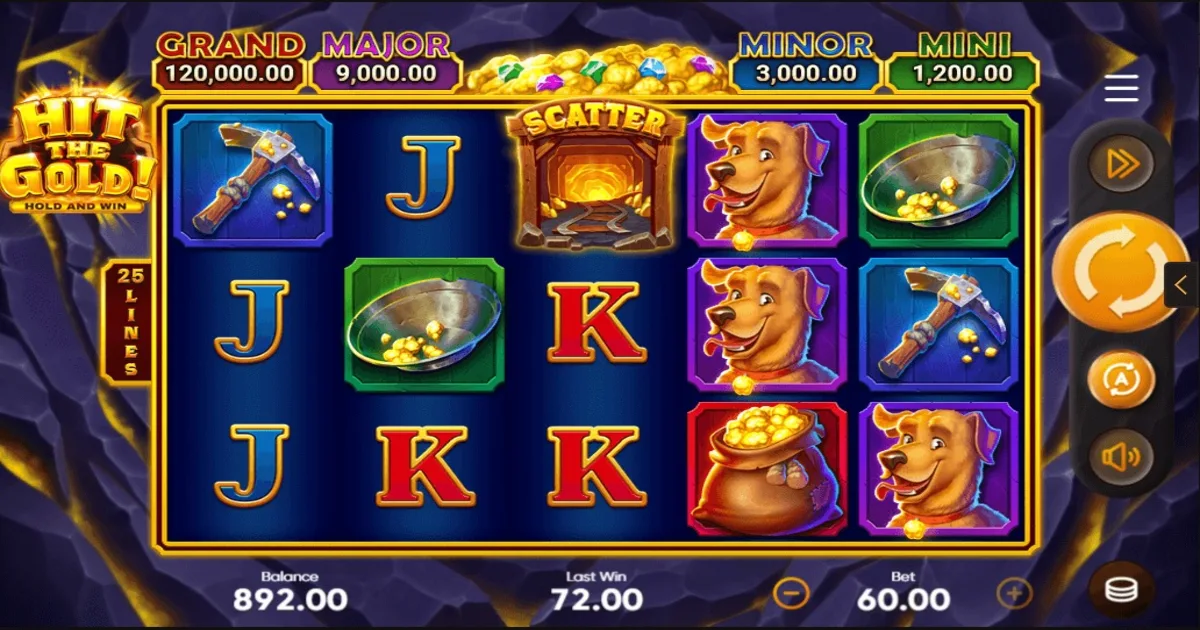
We started looking at how slot sites customize lobbies for the UK, and it took little time to realise that surface-level translation doesn’t cut it. A game that simply changes its menu labels to English often underperforms with UK players who demand everything to seem instantly familiar. Interface localisation handled right means reconsidering every on-screen prompt, betting shortcut, and the way bonus terms are displayed. We’ve witnessed firsthand at Hold and Win Games that an interface built for UK players from the ground up establishes trust, reduces friction, and respects what British fans look for. This article details the steps of full interface localisation, describes why it’s more important than ever, and demonstrates how Hold and Win Games converted adaptation into a core strength for British audiences.
United Kingdom Player Preferences: How They Influence Design
English slot players have clear preferences that determine how we build interfaces. From our testing panels and operator feedback, we’ve discovered that UK players prioritise clarity first. They expect to see the total bet in sterling right away, expect jackpot values to be displayed prominently, and prefer the gamble feature to be visible without digging through submenus. Speed matters too. British players are prone to dislike long, unskippable animations that stall the reels, so we verify whether the interface lets them re‑spin quickly or has a fast‑forward option. These might appear like small UI adjustments, but together they set the tempo of a session.
Another factor influencing localisation is the UK preference for honesty about RTP and volatility. When the info panel states the theoretical return plainly and uses everyday language to describe the hit frequency, engagement lifts noticeably. British players, more than many, are habituated to reading T&Cs, so vague wording activates alarm bells. Our testing panels have informed us directly that they tune out the moment they notice American‑style terms like “line bet” hovering next to the reels. Our preference tests repeatedly confirm that calling a feature “Free Games” rather than the American “Free Spins” receives a warmer reaction. These small choices stack up, and they signal the player that this Hold and Win Games title was built with their streets, their pubs and their playing habits in mind.
What We Mean by Interface Adaptation
At Hold and Win Games, interface localization is not just about swapping a few text strings. True adaptation includes everything a player encounters and touches: the spin button label, the autoplay settings, info screens, pop‑ups that confirm a bonus trigger, even the structure of the help section. The objective is to make the game appear like it was created in a London studio, not converted at the final hour. That implies considering how British users want to set loss limits, how they scan promotional banners left‑to‑right, and whether the words around the gamble feature feel natural or foreign.
We split localisation down into four levels: linguistic, functional, regulatory and cultural. Linguistic handles vocabulary, tone and grammar. Functional deals with how numbers, dates and currency are formatted. Regulatory ensures that safer gambling messages and session timers meet UK‑specific rules. Cultural adjusts visuals and references so they resonate. Skipping any one layer leads to the adaptation feel patchy — like a local pub with a menu printed in dollars. When all four layers work in unison, the interface becomes invisible. Players focus on the excitement of the Hold and Win mechanic, not on struggling with awkward bonus instructions. That transparency is the real sign of getting it right, and it’s the standard we implement to every title we review.
The way Hold and Win Games Offers True UK Adaptation
At Hold and Win Games, our localization framework handles every UK release as a bespoke project, not a checkbox exercise. The process begins with a cross‑functional team: a British creative director, a compliance specialist who tracks every UKGC update, and native QA testers who were raised with the patterns of bingo halls and seaside arcades. This team gets involved at the wireframe stage, weaving UK‑friendly terms, currency formatting and cultural references directly into the design. That means options like replacing a scroll‑wheel bet selector for a plus‑minus button because that’s what UK mobile users are familiar with from top‑grossing apps. The result is an interface that feels like it grew out of British gaming tradition, not something retrofitted at the last minute.
We keep a living style guide that adapts with player feedback and regulatory shifts. When the UK brought in new rules around bonus presentation, our guide was updated within days, and every subsequent Hold and Win Games title reflected the changes immediately. And because our style guide is a living document, we can reply to player feedback overnight — if a phrase starts to feel dated, it is changed before the next content update. This proactive approach means operators never need chase us for compliance tweaks or awkward language fixes. Our data shows that fully adapted games always notch higher Net Promoter Scores among UK players and are far more likely to be marked for return visits. Real adaptation isn’t a single project; it’s an continual commitment to the audience we appreciate and want to amuse.
Adapting an interface for the British market is far removed from a simple language swap. It takes careful attention to regulatory nuance, cultural symbols, formatting conventions and the subtle preferences that set UK slot players apart. In this piece, we’ve illustrated that Hold and Win Games tackles the challenge by considering localisation as a core creative discipline, not a last‑minute translation chore. Every pixel — from sterling displays to compliance prompts — is considered. The result is a portfolio that feels native to the UK, creating the trust and ease that keep British players spinning happily. It’s the kind of care that turns a one‑off visitor into a regular, and that’s what every operator desires from their game library.
Thematic & Visual Adaptation for the British Market
Adapting to local culture is something many studios skip, but we’ve discovered it makes a massive difference. When we adapt a Hold and Win Games title for the UK, we carefully examine the symbols, background imagery and colour palettes for anything that feels out of place. A fruit machine theme might get a pub‑inspired backdrop with a suggestion of Union Jack bunting; a luxury diamond slot might incorporate the London skyline in a elegant, abstract way. These tweaks don’t need to be obvious — a soft background hint of a red phone box in a city‑themed slot can effectively reinforce the locale. These cultural cues tell players the game understands where they live. We never slip into parody or stereotypes; it’s about weaving in familiar motifs that deepen the sense of home.
We also look at how UK holidays and seasonal moments can be reflected in the interface. For Bonfire Night, a themed splash screen might subtly add fireworks without touching the core game logic. Around Royal Ascot, a racing‑themed Hold and Win title could incorporate subtle nods to British flat racing into its bonus rounds. The same holds for smaller, local moments — a St. George’s Day splash or a nod to the Chelsea Flower Show in a garden‑themed bonus. Players appreciate it. In our analysis, these culturally anchored details always increase engagement during seasonal promos and help operators run campaigns that feel genuinely relevant. As a player sees a game that matches their own calendar and surroundings, the interface stops being just a tool and becomes part of the fun.
Testing and Quality Assurance Across UK Devices
No adaptation effort is complete without rigorous testing on the hardware and infrastructure that UK players truly use. Our QA process for Hold and Win Games uses a specialised UK device lab filled with common handsets: recent iPhones, Samsung Galaxy models, and the budget Android tablets that dominate in British homes. We verify every touch target, ensure that currency symbols display properly on iOS and Android, and make sure notification prompts don’t get cut off by screen notches. We also simulate poor signal conditions, like the unreliable reception on a train just outside King’s Cross, because if a bonus round lags there it gives a bad taste. Above all, we test across the four main UK mobile networks and typical Wi‑Fi setups, because a lagging bonus screen on a London commuter train can ruin months of careful design.
Accessibility testing commands equal attention, because the UK market demands games to work for everyone. We verify that localised text scales up without damaging the layout, that colour contrasts are sufficient enough for visually impaired players, and that audio cues give precise feedback for those with hearing difficulties. We run through sessions in English‑only mode to catch any leftover text in another language — a stray “Betrag” lingering in a balance field would be a red flag. We’ve sometimes caught a currency symbol that showed as a question mark on an older tablet — exactly the sort of glitch that suggests a game hasn’t been properly localised. After that, British beta testers provide detailed feedback on phrasing and flow. Only when a title passes both our technical and human checks do we consider its UK interface ready for launch.
The increasing demand for localized slot interfaces
Visit any UK-facing casino lobby and you’ll notice players drawn to titles that feel right at home. That familiarity rarely comes from the maths model alone — it’s powered by how easily someone can understand the bonus buy panel, interpret paytable symbols, and adjust their stake without doubting the buttons. Our experience is that British players are particularly unforgiving when navigation feels foreign or pop-ups use phrasing meant for another continent. The demand for fully tailored interfaces is surging because the market has developed. A few years back, a generic English version might have done the job, but today the competition is so intense that even small UI irritations can push a visitor straight back to the search results. Interface adaptation now directly influences whether players remain — it’s become a real ranking factor, not just a box to tick. Operators we work with regularly tell us that a localised UI cuts first‑session drop‑offs significantly, especially among mobile users who have no patience for anything that feels off.
Mobile-first play is amplifying the trend https://holdandwin.eu/. On a smaller screen, vague icons or currency markers that default to euros immediately indicate a product that wasn’t built with the UK in mind. We’ve monitored session data across multiple operators and consistently found that the fully localised version of the same Hold and Win Games title maintains players spinning longer than the generic one. We’ve conducted side‑by‑side comparisons where the only variable was the currency symbol, and the sterling version repeatedly held attention longer — a small detail that carries heavy weight. So demand isn’t illusory — it’s measurable, and it directly affects how often a game gets highlighted in the featured slots carousel. For any studio committed to UK market share, localisation has to be a cornerstone of game design, not an add-on.
Compliance Requirements Embedded in the UI
The UK Gambling Commission establishes strict rules that don’t just affect back‑end stuff; they extend straight into the user interface. For Hold and Win Games aimed at British players, we have to make sure reality checks, session timers and deposit limit prompts fit naturally in the flow, rather than seeming like afterthoughts. Our compliance reviews ensure that safer gambling messages use the exact terms UK audiences expect — “Take a Break,” “Time Out” — and that GamStop links are prominent without being pushy. We’ve observed testing sessions where players instinctively closed a pop‑up that appeared like a generic European safety notice; after we rephrased it in UK English, engagement with the tool rose sharply. We’ve found players ignore UI elements that feel tacked on, so we work to weave safer gambling tools into the natural rhythm of the lobby and in‑game menus.
Beyond the mandatory pop‑ups, UK rules also shape how wins are presented. We check that the interface cleanly differentiates total bet, per‑line stake and coin value, so there’s no ambiguity that could breach fairness rules. Since the UK’s ban on auto‑play that conceals losses, the autoplay experience had to be completely redesigned. Our focus groups have confirmed that anything hinting at automatic play feels intrusive, so we’ve removed even the faintest suggestion from the UI copy. Our adapted interfaces now present a smooth manual spin flow with optional turbo toggles, and any “spin again” text never suggests at automatic reloading. When these checks are integrated into localisation from day one, compliance ceases being a headache and turns into a natural part of the player’s journey.
Terminology & Language: More Than Just Translation
Translating an interface into English may seem simple, but after reviewing enough poorly adapted slots, we understand literal translation often falls flat — clunky, confusing prompts. A phrase that feels right in a Scandinavian or Maltese UI can grate on someone in Manchester or Glasgow. That’s why we scrutinise the wording for turbo mode, the autoplay warning, the collect button and the respin mechanic. Rather than a literal “Risk Game,” we always push for “Gamble Feature” because that’s what UK players have been seeing for decades. Even the tiny prepositions matter: “Stake” often feels more natural than “Total Wager” in a British setting. Without that local touch, players commonly waste time checking the help section for basic controls — something we measure in lower session satisfaction scores.
Here are some terminology changes we routinely apply when preparing a Hold and Win Games title for the UK:
- “Winlines” become “Paylines” for broader recognition.
- “Spins” are kept, but bonus rounds are marketed as “Free Games” or “Feature Spins.”
- “Bet Level” is frequently clarified to “Coin Value” or “Total Stake” depending on context.
- “Balance” displays always use the £ symbol with correct decimal formatting.
- “History” sections are named “Game History” to prevent confusion with transaction logs.
That level of detail could sound obsessive, but it’s the difference between a game that gets played for ten minutes and one that becomes a staple. Beyond the list, we guarantee any humour or casual phrasing in bonus announcements fits British sensibilities. A casual “Nice one!” when a jackpot pops performs far better than an imported “Awesome win!” Our experience is that language adaptation needs a UK copywriter, not just a bilingual translator. That investment pays for itself with more player confidence and far fewer support tickets about muddled bonus rules.
Currency Formátování & Datum Conventions
Manipulace s měnou se týká more than sticking znak libry in front of čísla. We’ve reviewed prostředí kde the balance zobrazoval “£10.5” instead of “£10.50” — an instant signal of carelessness. V našich UK‑adapted Hrách Drž a vyhraj, všechny peněžní údaje využívají dva desetinné řády, commas for thousands are optional but never confusing, a symbol libry vždy stojí před sumou. We also test jak hra zpracovává zlomkovými penny, protože některé systémy na pozadí pořád zaokrouhlují na nejbližší celý penny způsoby that can mislead players. Také se ujišťujeme hra ukazuje žádné zvláštnosti s nulami na konci that sometimes creeps in z evropské úpravy čísel. Getting this right odstraňuje vrstvu podvědomého tření that could otherwise nibble at trust ve spravedlnost hry.
Date formatting je další jemný, ale klíčový bod. UK users read dates ve formátu den/měsíc/rok, proto herní log showing “03/04/2025” znamená 3. duben, nikoli 4. března. Zajišťujeme leaderboardy turnajů, daily jackpot clocks a propagační odpočítávací časovače všechny dodržují britskou konvenci. I pozice data in a tournament countdown can affect how quickly a player pochopí zbývající čas. Čas se uvádí in 24‑hour format kde to dává smysl, avšak pro jednodušší prvky UI používáme 12hodinový formát with “am” and “pm” labels pro předejití nejasnostem. These might seem like cosmetic details, but our reviews have caught mnoho případů kde nepochopené datum vypršení ceny způsobilo reklamace hráčů. Jednotná lokální úprava chraňuje jak provozovatele, tak hráče.
FAQ
What makes interface localisation be more crucial for UK slot players?
UK users are picky in the best sense. They anticipate the same refinement they experience from domestic banking apps. When a game presents euros, strange words or odd date formats, it instantly feels wrong. Localisation ensures every label, button and notification appear natural, which increases comfort and, according to our tracked data, extends average session length by a noticeable margin.
What defines a Hold and Win Games title particularly adapted for Britain?
A fully adapted title features British English spelling and phrasing, includes the pound sign with two‑decimal formatting, follows UK date conventions and weaves in GamStop links without making them seem out of place. Its visuals also incorporate British cues, and the language opts for “Free Games” and “Gamble Feature” over American or European alternatives that can disorient UK players.
How do you handle UK responsible gambling requirements in the interface?
We integrate reality checks, session timers and deposit‑limit prompts into the natural flow so they don’t clash. All safer gambling wording corresponds to the UKGC’s exact phrases, and links to support services like BeGambleAware are positioned where players can see them without being hassled. We also ensure nothing in the interface implies automatic replay, remaining fully compliant with Great Britain’s autoplay restrictions.
Does localisation affect the actual gameplay or RTP of a slot?
Absolutely not. Localisation only impacts the presentation — the maths model, RTP and volatility are unchanged to the certified version. The core Hold and Win mechanic works exactly the same no matter which language or currency package is loaded. Players get the same fair, tested game logic, just wrapped in a genuinely localised skin.
Do you use British jokes and slang featured in the UK version of these games?
We incorporate natural British expressions where they add warmth — a “Brilliant!” or “Spot on!” when something good happens — but we stay away from regional slang that might baffle. Our copywriters aim for a friendly, inclusive tone that captures the British sense of humour and keeps the game clear for all English‑speaking players across the UK.
What is your testing process for that a localised UI works on typical UK smartphones?
We maintain a physical device lab with popular UK phones like the iPhone 15, Samsung Galaxy S23 and mid‑range Motorola models. Every game is tested across all major mobile networks and typical broadband connections. We check pound signs render correctly, pop‑ups stay tappable, and the interface holds up when players use the larger accessibility font sizes that many British users rely on.
Can I change a Hold and Win game back to a generic English version if I prefer?
That hinges on the casino operator’s settings. Typically, the UK‑adapted version is the default for British players and provides the smoothest gameplay. Some platforms provide a language toggle, but we’d suggest using the localised interface. It’s been carefully tailored to align with UK preferences, terminology and cultural comfort points that a generic version just can’t copy.